
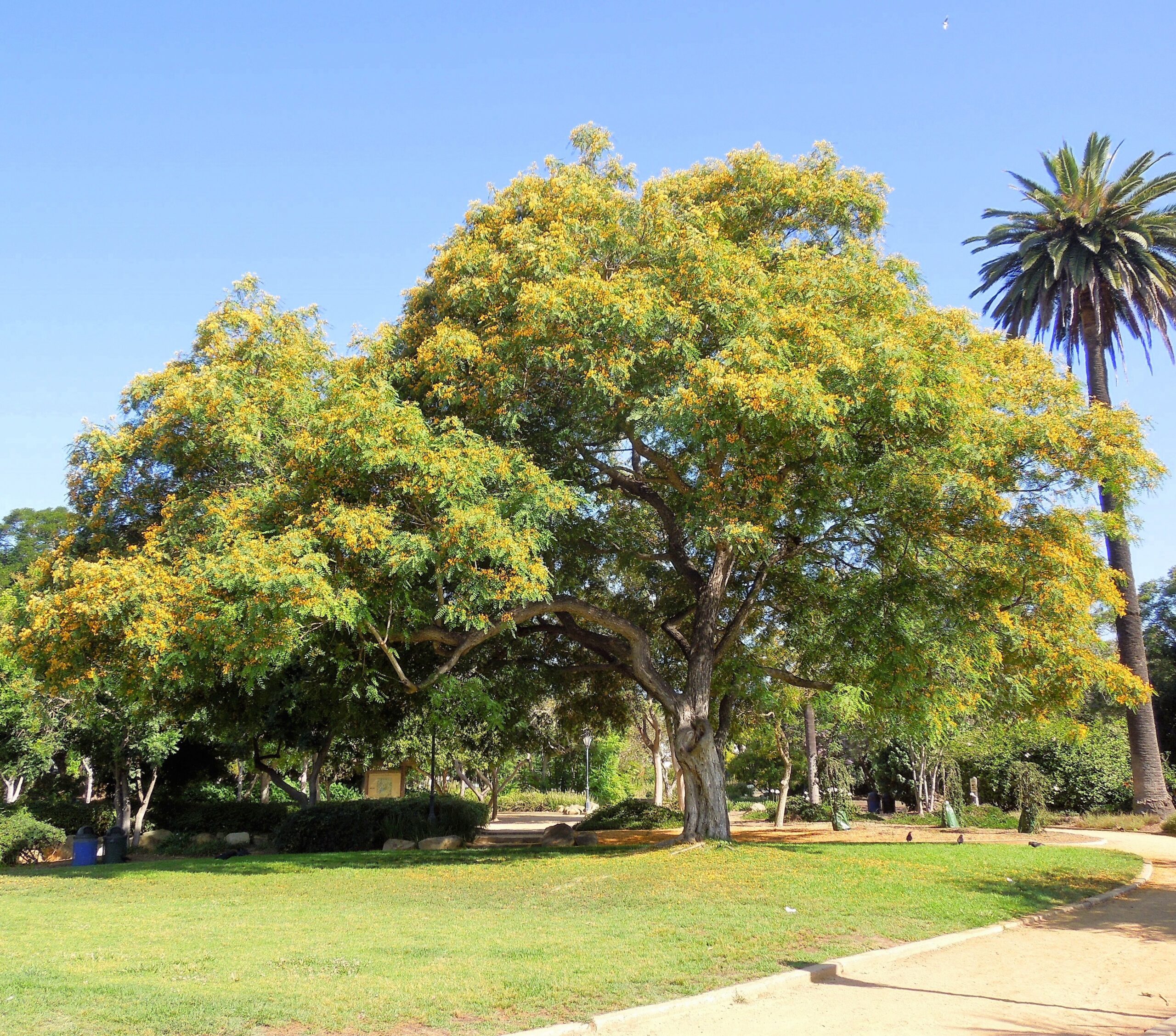
 The Tipu (pronounced “Tee-poo”) Tree is an ideal choice if you are looking for a tree that will grow quickly and will provide cooling shade over a large space. For these utilitarian reasons, it has often been selected for planting in Santa Barbara’s parks and parking lots.
Of course, its aesthetic qualities have also been well appreciated – bright flowers and long weeping boughs – which add an exotic and tropical appearance to our landscapes.
Tipu Tree has graced our community since its introduction into California in 1897 by our local pioneering horticulturist, Dr. Francesco Franceschi. Not surprisingly, the oldest specimen in our area is in Franceschi Park.
It is relatively fast growing; in just 10 to 15 years, a Tipu Tree can reach up to 30-feet tall with an equal or greater spread. At maturity, it can reach a height of over 60-feet with a spread exceeding 90 feet!
The Tipu Tree is a deciduous tree that will briefly drop its leaves in winter. In spring, it pushes out bright-green, fern-like, pinnately compound, leaves (6- to 12-inches long). Each leaf has 11 to 12 pairs of leaflets and a single terminal leaflet (each leaflet is1½-inches long and ½-inch wide).
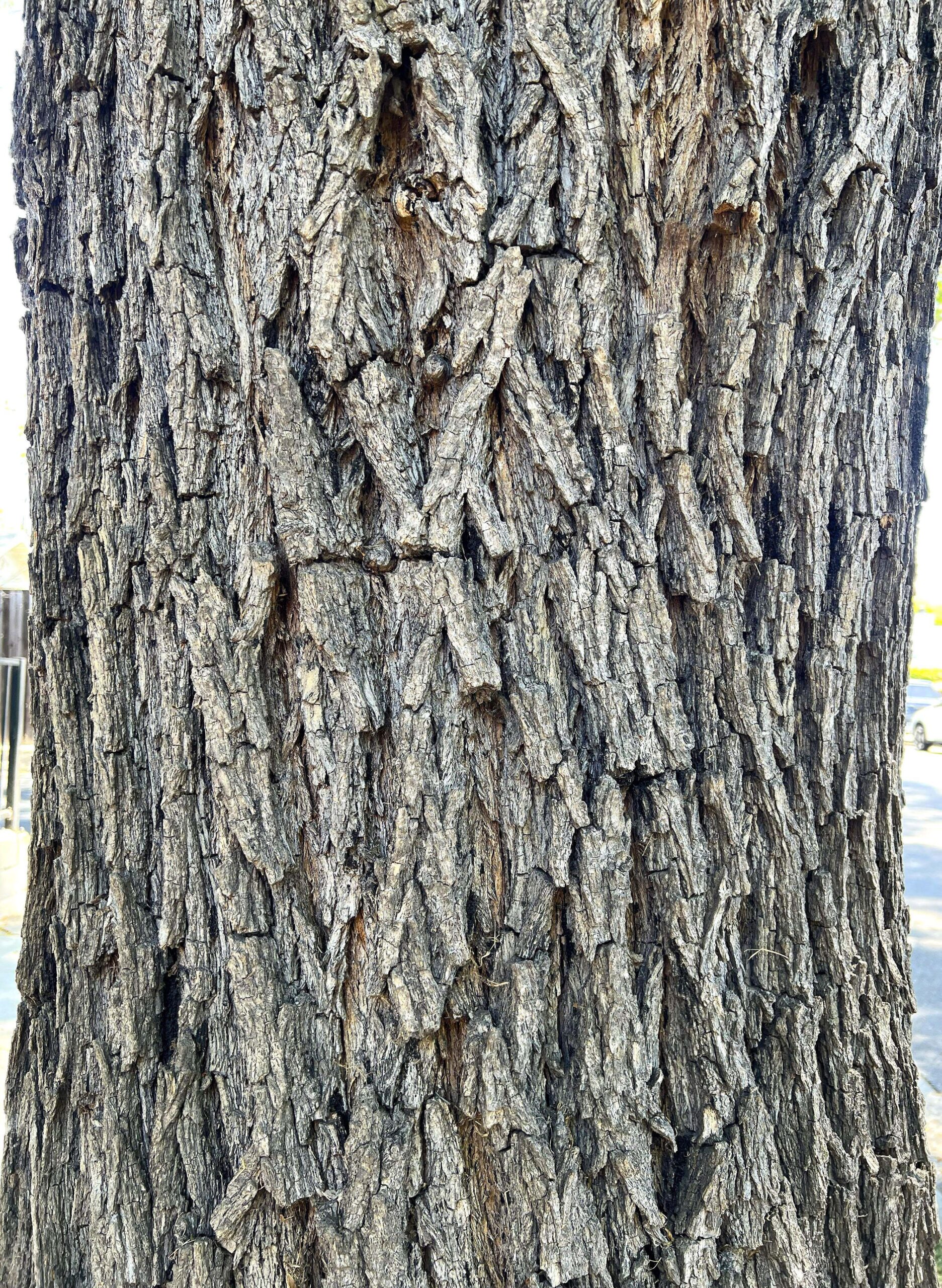
The bark is a distinctive grayish brown and will develop interlacing flaking ridges.
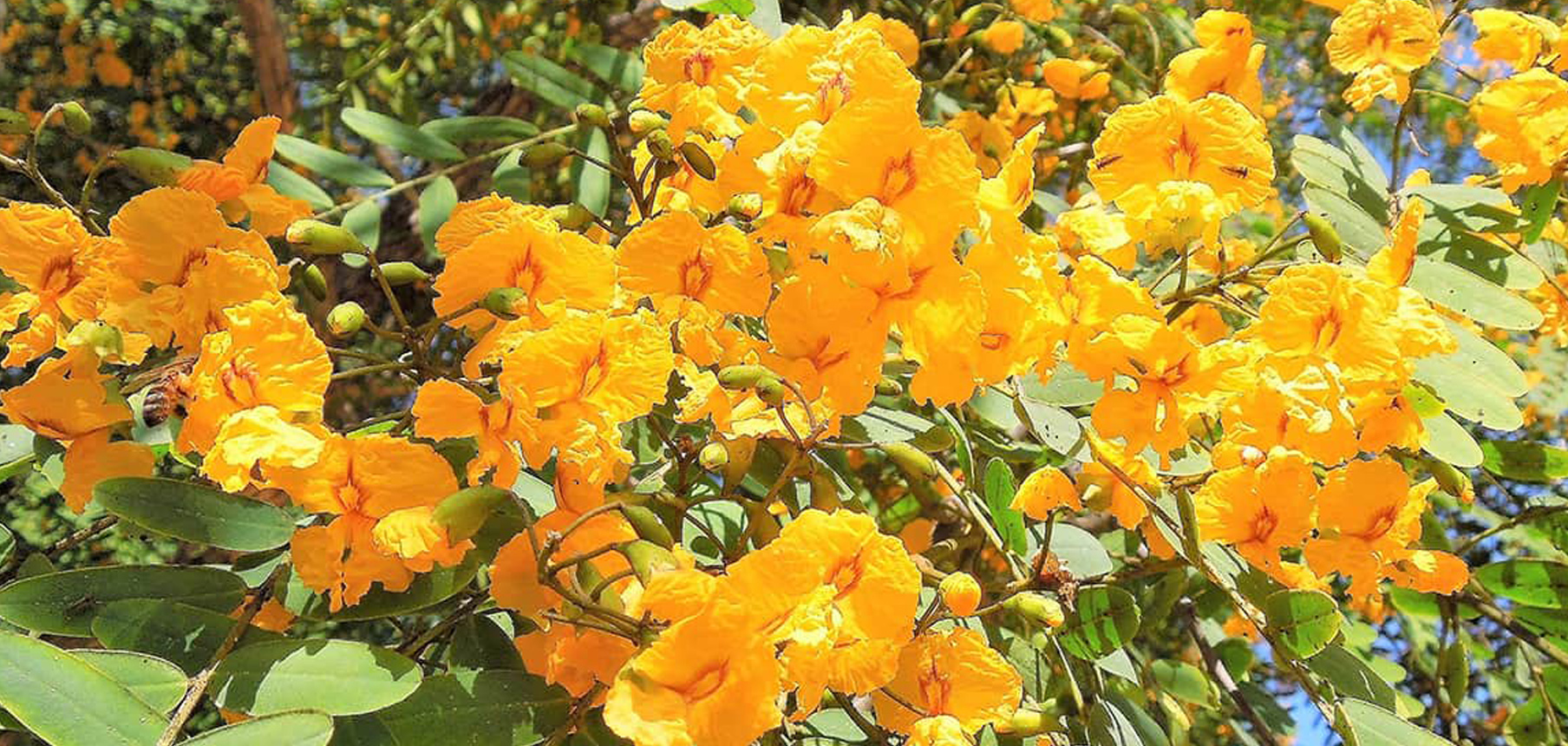
 In summer, beautiful flowers – bright yellow-orange with red centers (3/4-inch in diameter) – provide a delightful show throughout the canopy. Their nectar is highly attractive to bees. Often, the petals simply drop off, creating a lovely yellow-orange carpet on the ground.
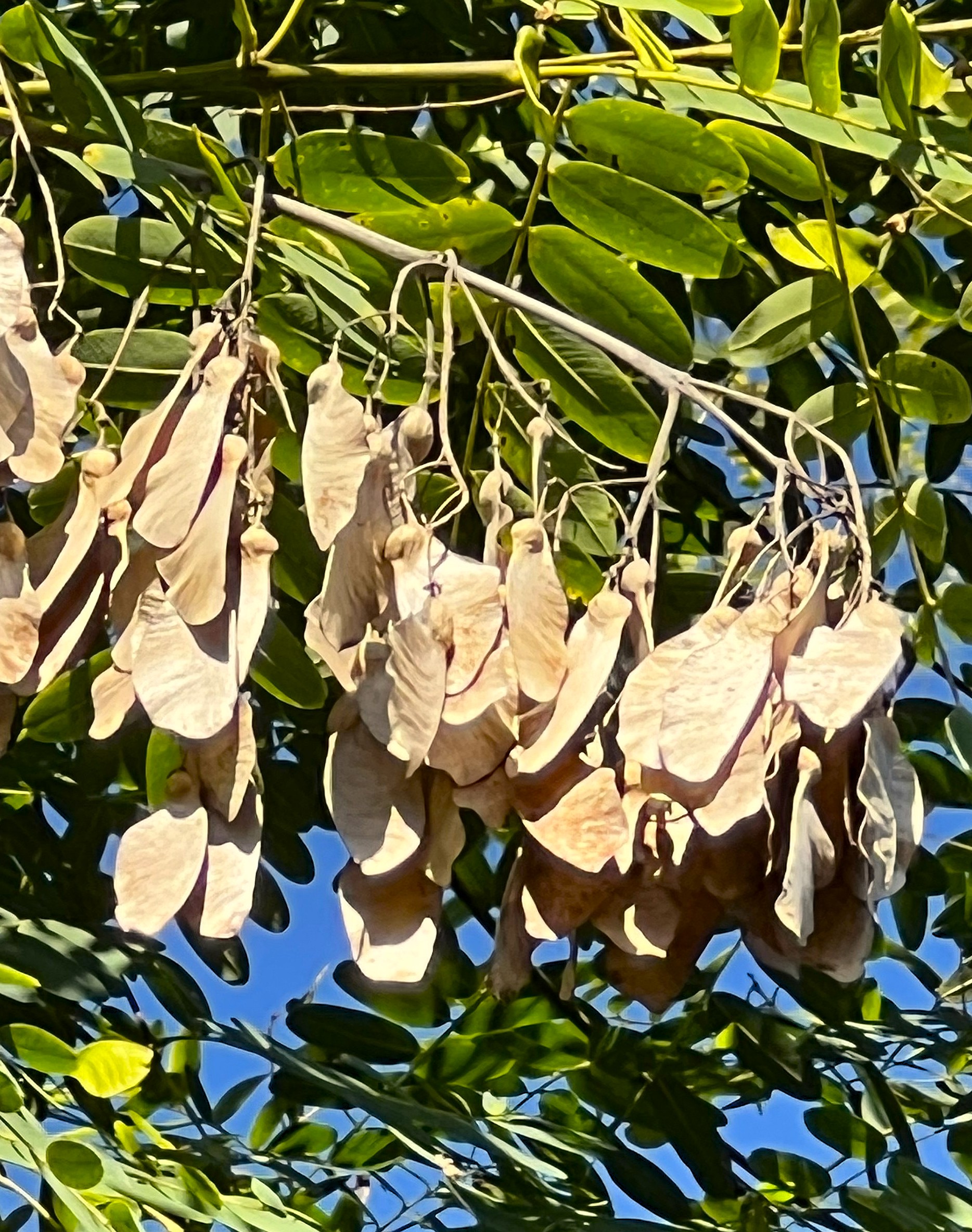
 In fall, pollinated flowers produce seed pods (2-inches long) that are green when young, turning beige-brown with age. The pods are single-winged (they look like one-half of a maple tree’s double-winged samara seed) and spin lazily in the wind as they fall.
 Other common names for Tipu Tree are “Pride of Bolivia”, “Yellow Jacaranda”, and “Rosewood”. It is in the Fabaceae (legume) plant family. Its botanical name is Tipuana tipu. Its home ranges are in Brazil, Bolivia and Argentina. Its genus name and its species name are both derived from the word “tipu”, the native South American’s name for this tree. In fact, it is the only species in its genus.
This native of South America has made itself perfectly at home in Santa Barbara’s microclimates. It is not fussy about our various soils – it is happy enough with our normal rainfall and – after three to five years to become established, it will tolerate our droughts. Understandably, it will look better when given several deep watering sessions during the dry season.
In wetter areas worldwide, it can be invasive – but this is not a problem in our Mediterranean climate, because it does not grow here from uncultivated seeds.
Tipu Tree grows best in full sun and deep sandy loam soil. It can tolerate high heat and is cold hardy to 22° F. Happily, it is not affected by any serious insect or disease pests. Due to its fast growth, it does require occasional pruning to maintain its structure. Because of its potentially large size at maturity, the primary consideration in planting a Tipu Tree is providing adequate space for its ultimate canopy and root system.
Mature Tipu Trees stand as street trees in the 200 block of West Ortega Street, in the 1200 block of Punta Gorda Street, in the 600 and 700 blocks of West Valerio Street, on the northwest corner of Carrillo Street and San Andres Street, in the 200 block of South Alisos Street, and in 900 to 1300 blocks of Cacique Street. Spectacular street trees on Via Diego and Via Rosa. They are also seen in Alice Keck Park Memorial Garden, in Franceschi Park (a 60-foot tree!), and in many of our residential and commercial landscapes.
Tree-of-the-Month articles are sponsored by Santa Barbara Beautiful, whose missions include the increase of public awareness and appreciation of Santa Barbara’s many outstanding trees and, in a long-time partnership with the City Parks & Recreation Department, the funding and planting of trees along the City’s streets.
Those who wish to honor a special someone can do so with an attractive commemorative marker that will be installed at the base of an existing street tree in the City of Santa Barbara. Because Santa Barbara Beautiful has participated in the planting to date of over 14,000 street trees, there are plenty of trees from which to choose! Application forms are available on the Santa Barbara Beautiful website, www.sbbeautiful.org. This website also contains an archive of all previously published Tree-of-the-Month articles, including photos.
Article and Photos by David Gress